← Back to Brew Guide
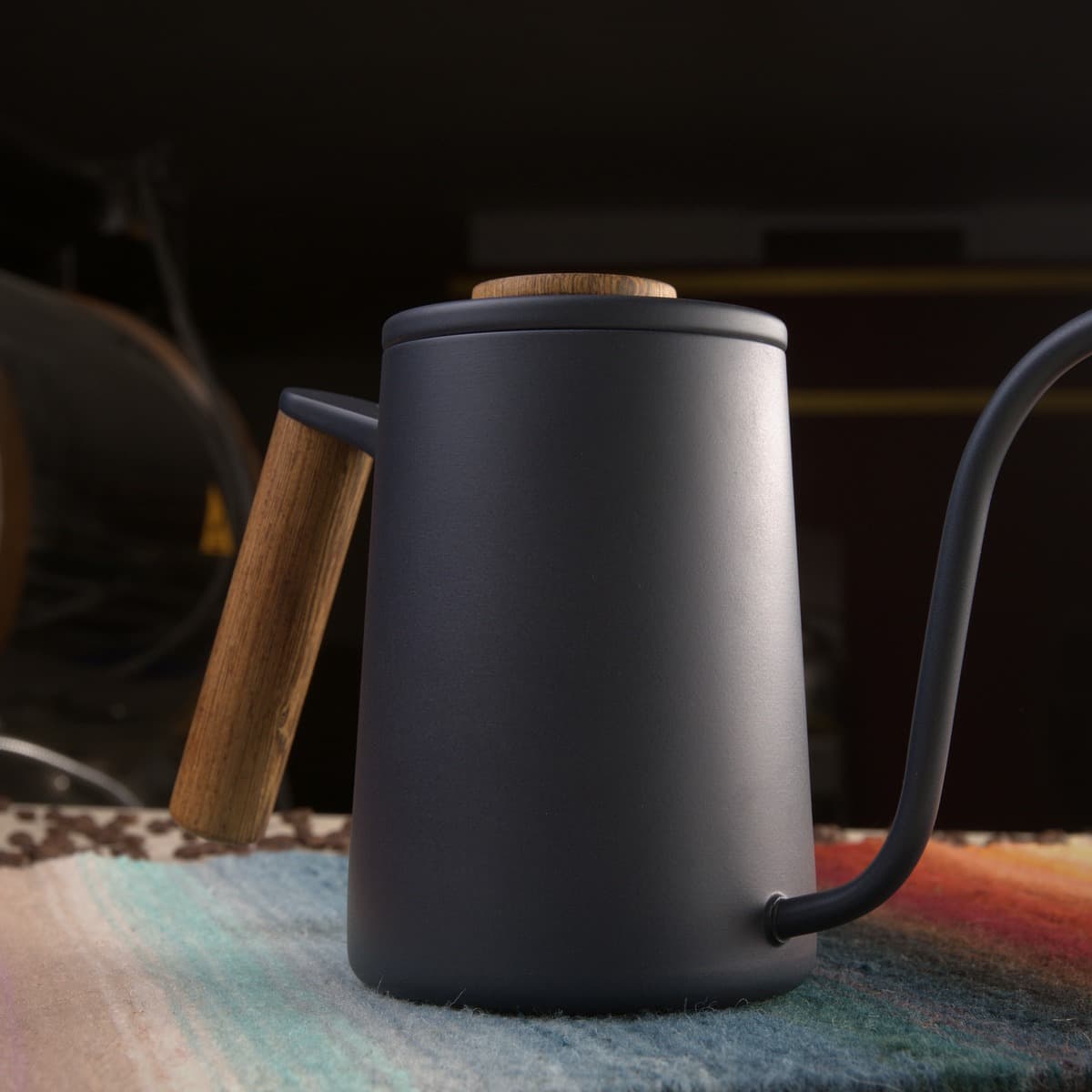
Gooseneck Kettle

Gooseneck Kettle

A gooseneck kettle's thin, curved spout is what makes precise pour-over technique possible. A regular kettle's water rushes out as a wide, unpredictable stream, but a gooseneck lets you control both where the water lands and how fast it flows — the two things that determine even saturation and consistent extraction in methods like V60 and Chemex. Without one, water tends to gush unevenly, digging channels through the grounds and leaving parts of the bed under- or over-extracted.

Care & Maintenance

  • Descale regularly, especially with hard water — mineral buildup inside the spout and boiling chamber affects both flow rate and heating efficiency.
  • Dry the kettle fully after each use, particularly around the spout opening, to prevent water spots and tarnishing on stainless or copper finishes.
  • Avoid abrasive sponges or steel wool on the exterior — they dull a polished or matte finish quickly.
  • For electric variable-temperature kettles, never submerge the base or power connection, and keep the temperature sensor area free of mineral crust.
  • Check the spout opening periodically for mineral or residue buildup that can distort your pour stream over time.